
The American fashion landscape is undergoing a massive shift. Today, over 60 percent of Gen Z shoppers regularly mix vintage finds with new pieces, signaling a move away from “fast fashion” and toward “storytelling fashion” bejuliet.com. As a designer, I see this as the ultimate creative challenge: how do you take a garment with decades of history and make it feel like it belongs in a 2025 editorial?
The secret isn’t just in the clothes; it’s in the vibe. Whether you are scouring thrift shops in Brooklyn or high-end vintage boutiques in Melrose, the goal is to bridge the gap between “costume” and “contemporary.” In this guide, we will explore the art of the style fusion, ensuring your wardrobe feels curated, sustainable, and undeniably chic.
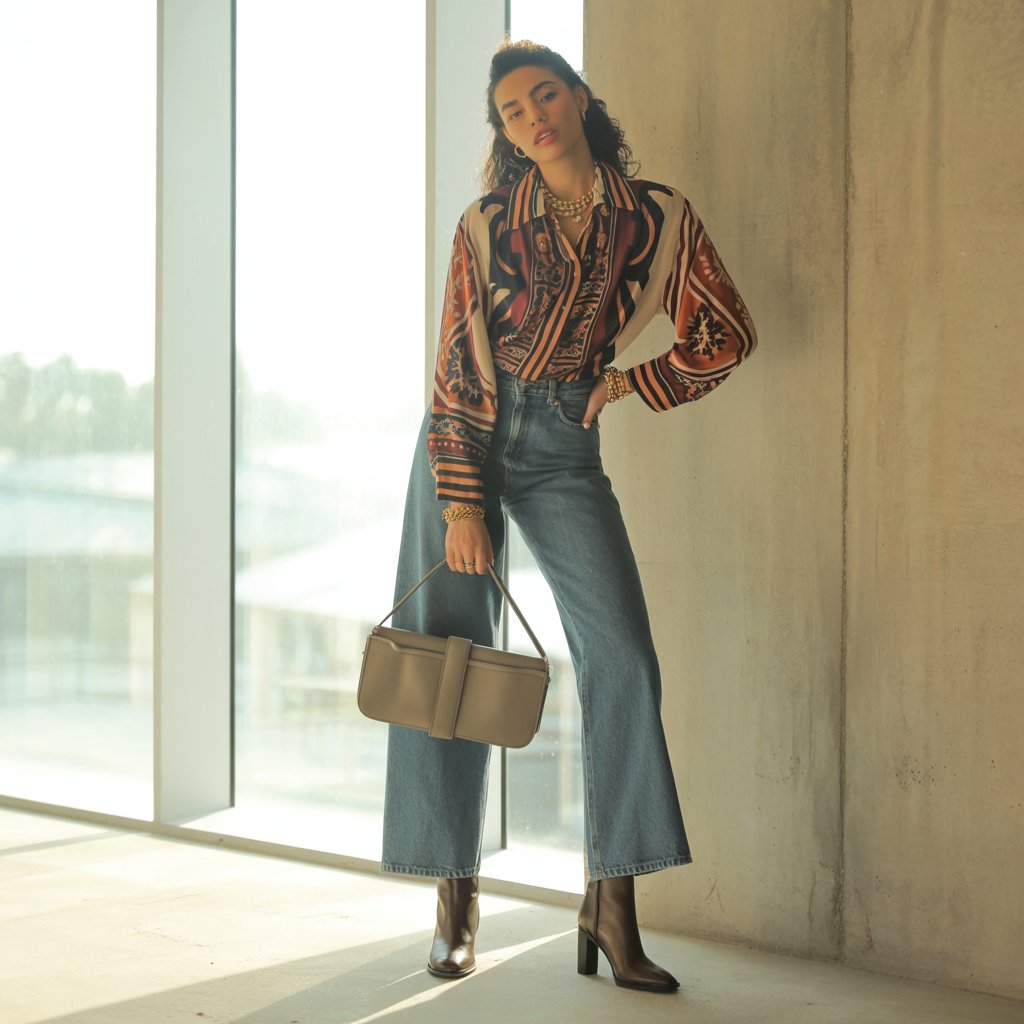
The Philosophy of the “Anchor Piece”
Every successful outfit needs a foundation. When mixing eras, I always recommend selecting one “anchor” vintage piece to set the mood—be it a 1970s suede fringe jacket or a 1950s high-waist skirt leblooms.com. This piece carries the soul of the outfit, providing a textured history that modern garments often lack.
Once your anchor is set, the rest of the look should serve to modernize that central element. Think of it like a conversation: the vintage piece is the storyteller, and your modern basics are the supportive listeners that keep the story grounded in the present day.
“Mixing vintage and modern fashion is about harmonizing contrasting design elements to create a cohesive and vibrant visual dialogue.” — Jessa Paisley, Fashion Consultant
| Era | Key Hallmark | Modern Pairing Suggestion |
|---|---|---|
| 1960s | Mod Mini Skirts & Bold Prints | Sleek turtlenecks and chunky lug-sole boots |
| 1970s | Bell Bottoms & Disco Prints | Oversized blazers and minimalist bodysuits |
| 1980s | Power Shoulders & Neon | Slim-fit denim and neutral-toned sneakers |
| 1990s | Grunge Flannel & Slip Dresses | Leather trench coats and high-tech sneakers |
Mastering Proportions and Silhouettes
One of the biggest mistakes style enthusiasts make is wearing vintage head-to-toe without adjusting the silhouette. Modern fashion often prioritizes a balance of “big vs. small.” If you’re wearing a voluminous 1980s blazer with heavy shoulder pads, pair it with a sleek, modern legging or a fitted midi skirt to prevent looking swallowed by the fabric leblooms.com.
Conversely, if you found a pair of narrow, 1950s-style cigarette pants, try pairing them with an oversized modern hoodie or a crisp, boxy button-down. Playing with these shapes keeps the eye moving and ensures the outfit feels intentional rather than accidental. 💡 Pro Designer Tip: The “Rule of Two” To keep your look from looking like a costume, try the “Rule of Two.” Keep your vintage items to a maximum of two pieces per outfit. For example, a vintage silk scarf and a vintage handbag are enough to add character without overshadowing your modern denim and tee.
Why Sustainability is the New Luxury
In the US market, sustainability has transitioned from a niche interest to a major consumer driver. Choosing vintage isn’t just a style choice; it’s a political and environmental statement. By giving pre-loved items a new life, you are actively reducing the demand for “fast fashion” and the waste associated with it bejuliet.com.
Beyond the environment, vintage clothing often boasts superior craftsmanship. In the mid-20th century, garments were built to last, featuring hand-stitched hems, robust French seams, and high-quality natural fibers like wool and silk evepeckenpaugh.com. This “built-in” quality gives your modern wardrobe an instant upgrade in perceived value.
The Art of Layering Eras
Layering is a powerful tool to “deflate” the historical stiffness of antique garments. A great trick is to layer a light, modern mesh top under a vintage velvet vest or slip dress leblooms.com. This mix of textures creates a dynamic story that feels fresh and youthful.
Consider a 1940s tea dress; on its own, it might look like a period piece. However, if you layer a modern leather moto jacket over it and finish the look with combat boots, you’ve transformed “grandma’s Sunday best” into a gritty, urban-inspired ensemble that works for a night out in Los Angeles or Chicago.
5 Essential Steps for a Modern-Vintage Mix
- Select your Anchor: Pick one standout retro item to be the heart of the look.
- Neutralize with Basics: Pair bold vintage prints with solid, modern neutrals.
- Modernize Accessories: Use contemporary sunglasses, tech-forward watches, or sleek sneakers to ground the look bejuliet.com.
- Tailor for Today: Don’t be afraid to hem a vintage dress or slim down the sleeves of an old coat to fit modern standards.
- Texture Contrast: Match rough vintage denim with smooth modern silks or satins.
Transforming the “Hard-to-Wear” Items
We all have that one “cuckoo” vintage item—maybe an opulent 80s gold lamé jacket or a heavily beaded 1920s gown—that feels too “much” for the real world vogue.com. The key to wearing these is subversion.
Take a vintage YSL suit, for instance. Rather than wearing it with pearls and pumps (the traditional way), try breaking it up. Wear the jacket with bright red bike shorts and slim sneakers for a look that feels athletic and high-fashion vogue.com.
Final Thoughts from the Atelier
As a designer, I believe that the most interesting people in the room are the ones whose clothes tell a story across time. Mixing vintage and modern styles allows you to be an architect of your own identity. You aren’t just wearing clothes; you are curated a gallery of human history, tailored specifically for the $21^{st}$ century.
For those looking to dive deeper into the technical side of garment history, I recommend exploring resources on fabric evolution. Understanding how weight—measured in grams per square meter—changes the drape of a skirt can help you predict how a 1940s wool will interact with a 2024 polyester blend.
Ready to transform your wardrobe? Start small, experiment often, and remember that fashion is the only time-traveling machine we have. Enjoy the journey!
