
Have you ever put on a shirt that made you look instantly radiant, only to try on another in the exact same size that left you looking washed out or tired? The secret isn’t just the fit—it’s the color. Learning how to dress for your skin tone is one of the most transformative style skills you can develop. It boosts your confidence, streamlines your shopping trips, and makes getting dressed every morning an absolute breeze. When you wear colors that harmonize with your natural complexion, your skin looks brighter, your eyes pop, and your overall appearance feels effortlessly put-together.
Before diving into specific color palettes for skin tone, it’s crucial to understand the difference between skin tone and skin undertone. Your skin tone is the surface color you see in the mirror (fair, medium, deep), which can change with sun exposure or skincare routines. Your undertone, however, is the subtle, unchanging hue beneath the surface. In this ultimate guide to dressing for your skin tone, we’ll break down the science of color analysis for clothing, share foolproof at-home tests, and provide actionable outfit ideas by skin tone so you can build a wardrobe that truly flatters.
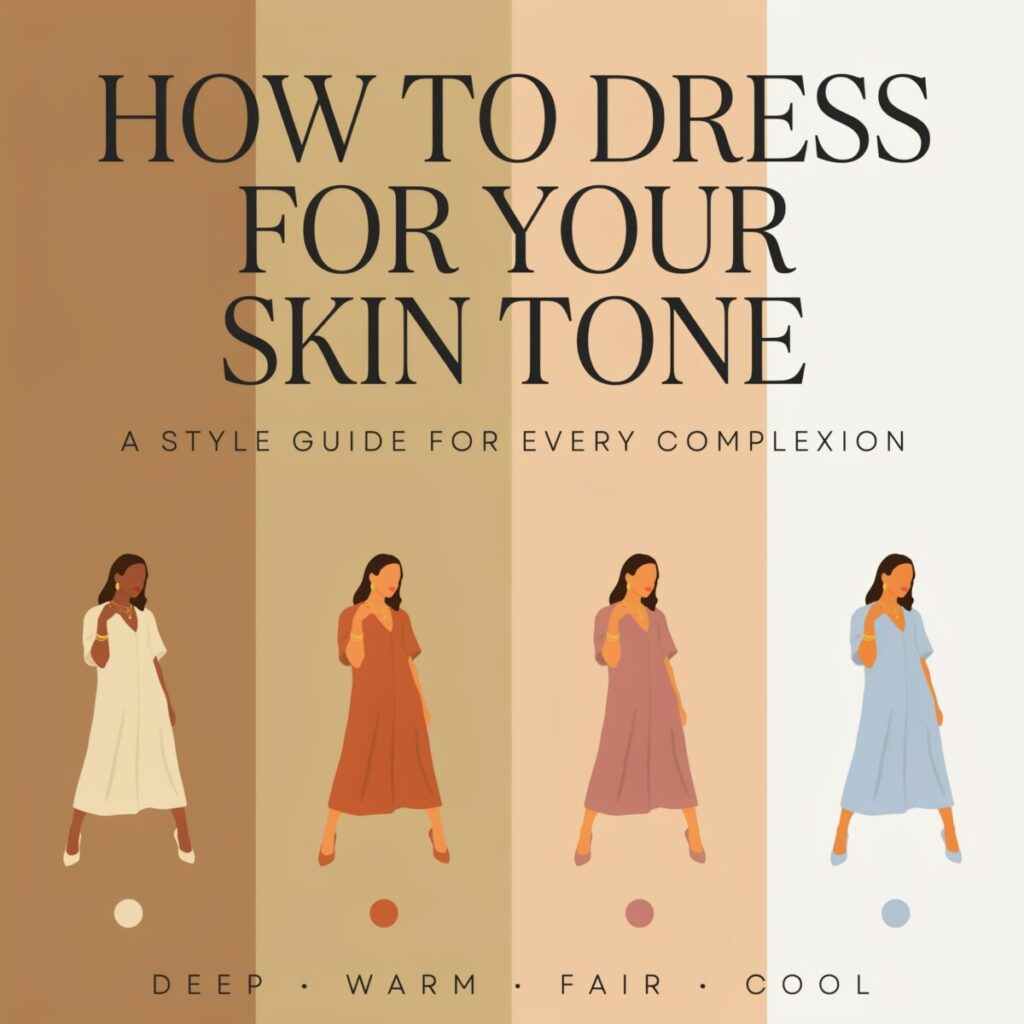
Section 1: Skin Tone Basics
Understanding Skin Tone vs. Undertone
To master clothing colors for skin tone, you first need to identify your undertone. Undertones generally fall into three distinct categories: warm, cool, and neutral.
- Warm undertones have hints of peach, yellow, or golden hues beneath the surface.
- Cool undertones feature subtle notes of pink, red, or blue.
- Neutral undertones are a balanced mix of both, making them incredibly versatile.
A common misconception is confusing surface redness or “olive” skin with an undertone. Olive skin is actually a surface tone that can have warm, cool, or neutral undertones beneath it. Furthermore, figuring out what colors suit my skin tone is a universal question—these principles apply beautifully across all ethnicities and complexions, from the fairest porcelain to the deepest rich mahogany. Finding the best clothing colors for brown skin, for example, relies on the exact same undertone logic as finding shades for fair skin.
4 Easy Tests to Determine Your Undertone
Not sure where you fall? Try these simple at-home tests in natural daylight:
- The Vein Test: Look at the veins on the inside of your wrist. If they appear greenish, you likely have warm undertones. If they look blue or purple, you’re cool. If you can’t quite tell (or see a mix of blue and green), you’re probably neutral.
- The Jewelry Test: Do you look more vibrant in gold jewelry or silver? Gold typically flatters warm undertones, while silver and white gold enhance cool undertones. Neutral undertones look great in both.
- The White Paper Test: Hold a piece of pure white paper next to your clean, makeup-free face. If your skin looks yellowish or peachy by comparison, you’re warm. If it looks pink or rosy, you’re cool.
- The Sun Reaction: Do you burn easily and rarely tan (cool), or do you tan effortlessly and rarely burn (warm)?
Section 2: Color Theory Essentials
The Science of Color Analysis for Clothing
Once you know your undertone, you can unlock the magic of color theory. Colors are generally divided into warm and cool families. Warm colors (like mustard, rust, and olive green) contain more yellow and orange pigments. Cool colors (like sapphire, emerald, and magenta) have blue and purple bases.
When choosing the best colors for your skin tone, the ultimate goal is harmony. Wearing colors that share your undertone creates a seamless, flattering effect. However, contrast also plays a massive role in how colors are perceived. High contrast—pairing a very light shade with a very dark one—can make your features stand out sharply, which is great for those with high-contrast natural coloring (like deep hair and fair skin). Low contrast outfits (pairing mid-tones together) offer a softer, more blended aesthetic.
Complementary and Analogous Outfits
You don’t have to wear just one color to make an impact. Analogous colors sit next to each other on the color wheel (like rust and mustard) and create a cohesive, sophisticated look. Complementary colors sit opposite each other (like navy and warm copper) and provide a striking, high-impact outfit.
Prints and Patterns
When incorporating prints, look closely at the dominant color in the pattern. If you have a warm undertone, a floral print with a cream background and terracotta flowers will flatter you much more than one with a stark white background and icy pink flowers. For cool undertones, geometric prints featuring navy, charcoal, and icy blue will look incredibly sharp. By anchoring your prints in your ideal color family, you can wear almost any pattern with confidence.
Section 3: Dressing for Warm Undertones
The Warm Undertone Palette
If your at-home tests pointed to gold jewelry and greenish veins, you have a warm undertone. Your most flattering shades are inspired by nature and the earth. Think of a beautiful autumn sunset or a lush spring garden. When looking for warm undertone colors, focus on rich, earthy tones: mustard yellow, olive green, warm reds (like tomato or brick), camel, cream, warm beige, rust, and coral.
When building your everyday looks, stick to warm bases. Swap out stark, optic white for creamy ivory or off-white. Instead of harsh black, try deep chocolate brown or rich charcoal, which are much softer and more forgiving against golden skin.
Outfit Ideas by Skin Tone: Warm Edition
- Casual Weekend: A creamy camel oversized sweater paired with olive green wide-leg trousers and gold hoop earrings.
- Office Chic: A rust-colored silk blouse tucked into a warm beige midi skirt, finished with a tan leather tote and gold loafers.
- Evening Glamour: A warm terracotta or tomato-red wrap dress with delicate gold layered necklaces and bronze strappy heels.
Makeup, Hair, and Accessories
Makeup for skin tone with warm undertones should enhance your natural golden glow. Look for foundations with yellow or peachy undertones. Swap harsh black eyeliners for rich espresso brown, and use a warm bronzer to accentuate your cheekbones. For lips, coral, brick red, and warm terracotta shades are universally flattering. If you dye your hair, warm shades like honey blonde, caramel, copper, and golden brown will beautifully frame your face.
When it comes to fabrics, warm undertones look incredible in natural, textured materials like suede, corduroy, and raw silk. These fabrics absorb light and complement the richness of earthy colors. For jewelry for skin tone, yellow gold, rose gold, and copper are your best friends. They reflect light warmly and blend seamlessly with your complexion, whereas bright silver can sometimes look a bit harsh or disconnected against golden skin.
Section 4: Dressing for Cool Undertones
The Cool Undertone Palette
If the silver jewelry test was your winner and your veins leaned blue, you have a cool undertone. Your ideal color palette is crisp, clear, and inspired by winter landscapes and deep oceans. The best cool undertone colors include striking jewel tones and icy shades: sapphire blue, emerald green, true royal red, cool pinks (like fuchsia or magenta), deep navy, charcoal gray, and pure, optic white.
Cool undertones look phenomenal in high-contrast pairings. A stark white blouse against a deep navy blazer creates a sharp, sophisticated silhouette that makes cool skin look vibrant and awake. Try to avoid muddy or overly yellow-based colors like mustard or orange, as they can clash with your pink/blue base and make you look slightly sallow.
Outfit Ideas by Skin Tone: Cool Edition
- Casual Weekend: A crisp optic-white t-shirt layered under a sapphire blue cardigan, paired with dark wash denim and silver sneakers.
- Professional Power: A tailored charcoal gray pantsuit worn over a cool icy-pink silk camisole, accessorized with silver stud earrings and pointed-toe black pumps.
- Holiday Party: A stunning emerald green velvet slip dress with a silver metallic clutch and white gold drop earrings.
Makeup, Hair, and Accessories
When shopping for makeup for skin tone with cool undertones, seek out foundations labeled “cool,” “rosy,” or “neutral-cool.” A cool-toned pink or berry blush will give you a natural, flushed-from-the-cold look. For lips, cherry reds, plum, and cool berry shades are absolute showstoppers. For hair color, ash blondes, platinum, icy silvers, and cool espresso browns are incredibly flattering. Avoid brassy yellows and opt for platinum or ash-blonde ribbons if you want highlights.
For accessories, jewelry for skin tone with cool undertones should lean heavily towards silver, white gold, and platinum. These metals echo the coolness of your skin and provide a bright, reflective pop. Gemstones like diamonds, sapphires, and amethysts also look exceptionally striking against cool complexions.
Section 5: Dressing for Neutral Undertones & Mixed Complexions
The Beauty of Neutral Undertones
If you couldn’t decide between gold and silver, or your veins looked blue-green, congratulations—you have a neutral undertone! Neutral undertones have a balanced mix of warm and cool pigments, meaning you have the most versatile palette of all. You can pull off a massive spectrum of colors without looking washed out.
However, even neutral undertones have “sweet spots.” The most universally flattering neutral undertone outfits feature shades that aren’t too overly bright or intensely saturated. Think of soft, dusty colors and mid-tones. Soft rose, muted teal, taupe, mushroom gray, and cornsilk yellow look incredibly elegant and harmonious.
Mixing and Matching
Because you sit right in the middle of the spectrum, you can easily mix warm and cool pieces in the exact same outfit. You might pair a cool navy blazer with a warm cream blouse, bridging the gap with a muted teal scarf.
Top fashion tips for skin tone with neutral undertones include avoiding neon colors, which can overwhelm your balanced complexion and cast strange reflections on your skin. Instead, lean into “dusty” or “heathered” versions of bright colors. If you want to wear a bold red, a true, balanced red (neither too orange nor too blue) is your ultimate power color. When testing colors, drape the fabric right below your chin in natural light. If your under-eye circles seem to vanish and your eyes look brighter, you’ve found a winner.
Section 6: Practical Wardrobe Tips
Building a Capsule Wardrobe Skin Tone
Knowing your colors is only half the battle; applying them to your closet is where the magic happens. Building a capsule wardrobe skin tone strategy means investing heavily in your most flattering neutrals. If you have warm undertones, your core basics (coats, trousers, everyday bags) should be camel, cream, and chocolate brown. If you’re cool, build your foundation on navy, charcoal, and pure white. These base pieces will mix and match effortlessly, ensuring you always have something to wear.
Smart Shopping and Lighting
When shopping, always take the garment to a mirror near a window or step outside. Store lighting is notoriously misleading—fluorescent bulbs can cast a greenish hue, while warm boutique spotlights can make everything look golden. A quick pro tip: use your smartphone! Take a quick selfie in the dressing room facing the light. The camera sensor often picks up color clashes that the naked eye misses in the moment.
Shifting the Impression
What if you want to wear a trendy color that isn’t in your ideal palette? Keep it away from your face! If icy pastel is trending but you have a warm undertone, wear it as trousers, a skirt, or a handbag. When you dress for your undertone, you can also use makeup to bridge the gap. A warm bronzer and peachy blush can warm up your face just enough to pull off a slightly cooler top. Scarves, necklaces, and collars act as a buffer between your face and an unflattering shirt, allowing you to wear whatever you love while keeping your complexion glowing.
Section 7: For Specific Needs
Dressing for Mature Skin and Varying Lighting
As we age, our skin can lose some of its natural contrast and pigmentation. For mature skin, overly harsh colors like stark black or neon brights can emphasize fine lines and shadows. Instead, opt for rich, medium-toned shades like soft navy, plum, or warm charcoal, which provide beautiful definition without the harshness.
Lighting also changes everything. An outfit that looks perfect in bright outdoor sunlight might look muddy in a dimly lit office or restaurant. For evening events, richer, deeper jewel tones tend to reflect artificial light beautifully, whereas pale pastels can easily get washed out.
Seasonal and Cultural Considerations
While your undertone never changes, your surface skin tone might darken in the summer. When you have a summer tan, you can often pull off slightly brighter, more saturated versions of your palette. Conversely, in the dead of winter, softer, muted tones might feel more harmonious. Finally, always honor cultural considerations and personal associations with color. If a specific vibrant shade holds cultural significance or brings you immense joy, wear it proudly near your face! Confidence is the most flattering accessory you can own, and it transcends any color wheel.
Conclusion: Discover Your Best Colors
Learning how to dress for your skin tone is a journey of self-discovery, not a strict set of rules. By understanding your warm, cool, or neutral undertones, you can curate a closet that makes you feel confident, vibrant, and authentically yourself. Remember to use the vein, jewelry, and paper tests as starting points, and always trust how a color makes you feel when you look in the mirror.
Ready to transform your closet? Start by doing one quick color test today, and audit your wardrobe to see which pieces align with your newly discovered palette. We’d love to see your style evolution! Share your favorite outfit photos with us on social media or leave a comment below. For more styling advice, check out our guides on [building a capsule wardrobe] and [finding your perfect foundation match].
Try one color test today and comment below which palette surprised you most.
